

6 min read
You're sitting across from someone new who feels familiar in all the wrong ways. They're charming, they're attentive — until things get real. Then the walls go up, the texts slow down, and you're left wondering how you ended up here again. You've done the inner work. You've set the boundaries. You swore it wouldn't happen again. And yet there you are, pulled toward someone who can't meet you where you are. If you've ever asked yourself why do I keep attracting emotionally unavailable people, Vedic astrology has a specific answer — and it's not what you'd expect.
"The 7th Bhava doesn't just describe who you attract. It describes the exact shape of the emptiness you keep trying to fill."
Key Takeaways
- The 7th Bhava (house of partnerships) in your Vedic chart maps your relational blueprint — including the specific type of emotional unavailability you keep encountering.
- Ketu (the south node) in the 7th house creates a pattern of attracting partners who are physically present but emotionally absent, often repeating a karmic loop from past-life dynamics.
- Venus (Shukra) afflicted in the 7th Bhava can signal that your desire nature itself is wired to pursue people who withhold, mistaking pursuit for passion.
- Breaking the pattern requires understanding your chart's specific configuration — not more boundary-setting, but a different kind of self-knowledge entirely.
What is the 7th Bhava in Vedic astrology?
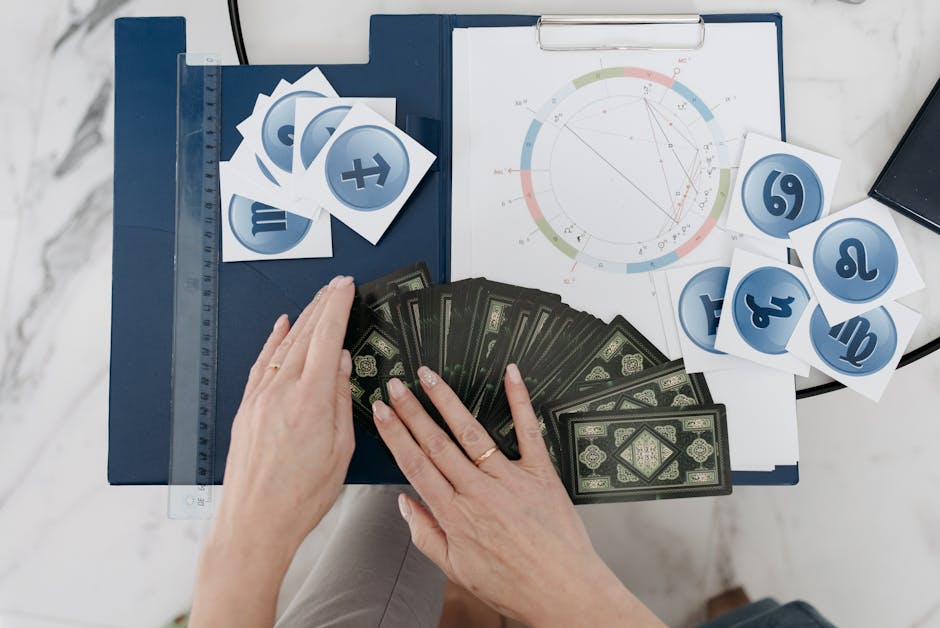
The 7th Bhava is the house of partnerships — marriage, committed relationships, and the people you choose to bind your life to. In Vedic astrology, the chart is divided into 12 Bhavas (houses), each governing a specific domain of life. The 7th sits directly opposite the 1st Bhava (the self), which is why it represents the "other" — the partner who mirrors what you can't see in yourself. Unlike Western astrology's sun-sign approach, Vedic astrology reads the 7th Bhava from your Lagna (rising sign), making it hyper-personal. Two people with the same sun sign can have completely different 7th Bhava configurations — and completely different relationship patterns. This is why generic horoscopes about "Scorpio in love" miss the mark. The 7th Bhava tells you not just who you'll marry, but why you keep choosing the wrong person before you get there.

How Ketu in the 7th house creates the unavailable partner loop
Ketu is the south node of the Moon — what Western astrology calls the south node, Vedic astrology knows as Ketu. It represents past-life karma, detachment, and the things you're here to release. When Ketu sits in your 7th Bhava, it creates a very specific relational pattern: you attract people who are emotionally incomplete. Not cruel, not abusive — just absent. They show up, they seem interested, and then something in them retreats. You feel the pull to chase, to fix, to earn their presence. And that chase becomes the relationship.
Here's what makes this placement so disorienting. Ketu in the 7th doesn't feel like a problem at first. It feels like destiny. The connection is intense, almost otherworldly, and you assume the difficulty is part of the depth. But Ketu's gift is detachment — and when it's placed in the house of partnership, it often manifests as a partner who is detached on your behalf. You're doing the emotional labor for two people.
The karmic layer matters here. Vedic astrologers read Ketu in the 7th as a past-life pattern where you either abandoned someone or were abandoned. The current-life replay isn't punishment — it's an opportunity to feel the full weight of that dynamic and choose differently. But without knowing the pattern exists, you just keep living it.
What Venus afflicted in the 7th Bhava adds to the pattern
Shukra (Venus) governs desire, pleasure, and what you're drawn to in love. When Venus is placed in the 7th Bhava but afflicted — meaning it's conjunct a malefic graha (planet) like Shani (Saturn) or Mangal (Mars), or it's in a difficult sign — your desire nature itself gets distorted. You don't just attract unavailable people. You're attracted to unavailability. The chase feels like chemistry. The distance feels like mystery. And when someone is fully present, fully available, your chart reads it as boring.
This is the part nobody wants to hear. The pattern isn't just happening to you — your Venus placement is actively selecting for it. An afflicted Venus in the 7th Bhava can make emotional withholding look like depth, and consistency look like a lack of passion. The fix isn't finding someone more available. It's recognizing that your internal calibration for "desire" is set to a frequency that keeps producing the same result.

Why your Shani placement shapes every relationship
Shani (Saturn) is the graha of delay, discipline, and hard-won maturity. In the 7th Bhava, Shani creates relationships that feel heavy from the start. There's often a significant age gap, a power imbalance, or a sense that the relationship is more obligation than joy. Shani here doesn't prevent love — it delays it, tests it, and demands that you earn it through sustained effort.
But Shani in the 7th also has a shadow side that directly connects to the emotionally unavailable partner pattern. Saturn restricts. When it governs your house of partnerships, it can restrict your partner's emotional expression — or your ability to receive it. You might find that your partners are capable of love in theory but incapable of showing it in the way you need. Or you might be the one who withholds, using emotional distance as a form of control you learned young.
The critical insight from Vedic astrology is that Shani's restrictions are diagnostic. They show you where your relational maturity is underdeveloped. A person with Shani in the 7th who hasn't done the Saturn work — the slow, unglamorous work of showing up consistently — will keep attracting partners who mirror their own avoidance. The chart isn't punishing you. It's showing you the exact muscle you haven't built.

What this can't tell you
Your Vedic chart maps the pattern with startling precision. It can show you the 7th Bhava configuration, the Ketu placement, the Venus affliction — the whole architecture of why you keep ending up across from someone who can't meet you. But the chart can't make the choice for you. Knowing you have Ketu in the 7th doesn't automatically break the loop. It gives you the map, but you still have to walk a different path. The danger of astrology — any astrology — is using the chart as a reason to stay stuck. "My Venus is afflicted, so this is just how I am" is the most expensive sentence you can read in your own birth chart. The chart describes the gravity. It doesn't remove your ability to fly.
Frequently Asked Questions
Can Vedic astrology really predict relationship patterns?
Yes, with more specificity than most people expect. The 7th Bhava, combined with the placements of Shukra (Venus), Ketu, and Shani (Saturn), creates a detailed relational blueprint. Vedic astrologers use this framework to identify not just who you'll attract, but the specific dynamic that will play out — including patterns of emotional unavailability.
What does Ketu in the 7th house mean for marriage?
Ketu in the 7th house often indicates a marriage that feels fated but emotionally incomplete. The partner may be physically present but psychologically distant. In some cases, it points to a late marriage or a partnership that requires significant spiritual growth from both people. It's not a curse — it's a karmic classroom.
How is Vedic astrology different from Western astrology for relationships?
Western astrology primarily uses sun-sign compatibility and the tropical zodiac (locked to seasons). Vedic astrology uses the sidereal zodiac (locked to actual star positions), reads the chart from the Lagna (rising sign), and analyzes specific Bhavas and planetary periods called Mahadasha (major planetary periods). The result is a far more individualized and predictive relationship analysis.
What is Shani Sade Sati and does it affect relationships?
Sade Sati is Shani's (Saturn's) 7.5-year transit through your Moon sign and the two adjacent signs. During this period, relationships are often tested — partnerships that were built on unstable foundations tend to crack. It's not a death sentence for love, but it is a restructuring phase. Many people experience breakups, divorces, or profound shifts in existing relationships during the middle 2.5 years.
Curious what this means for YOUR birth chart? Discover your Vedic chart on Stellr →
Free birth chart