

6 min read
You've done it — probably dozens of times. Pulled up your horoscope app, watched your Sun sign load on screen, and felt nothing. Not offense, not recognition. Just the polite distance of watching someone else's birthday party from outside the window. You're sure you're a Scorpio — your birthday says so, your app says so — and yet every Scorpio description on earth sounds like it was written for someone who underwent the same childhood as you and came out completely different. You assumed the problem was you. A mismatched reader staring at perfectly accurate instructions. But what if the instructions were filed under the wrong name? That's exactly what happens when your western sun sign gets transposed into the Vedic chart. A 23-degree sidereal offset — caused by a slow wobble in Earth's axis — silently shoved your Sun backward into a different Rashi years ago. And that quiet reassignment might explain why you've spent your whole life reading someone else's mail.
If the Sun you know has never fit, it's not because you're hard to read. It's because you're reading the wrong chart.
Key Takeaways
- Most people's Sun shifts one sign earlier when calculated under the Vedic (sidereal) zodiac compared to the Western (tropical) zodiac.
- The difference comes from Earth's axial precession — a 26,000-year wobble — which has pulled the tropical zodiac about 23–24 degrees away from the actual star positions.
- When your Sun sign flips from Western to Vedic, your rising sign, Moon sign, and every planetary placement in your chart also shifts — the whole picture changes.

What is the Vedic Sun sign?
Your Vedic Sun sign is calculated using the sidereal zodiac, which locks planetary positions to the actual star constellations visible in the sky at your birth. This contrasts with the tropical zodiac used in Western astrology, which locks positions to the seasons — the vernal equinox always marks 0 degrees of Aries, regardless of where Aries actually sits among the stars. The sidereal system is what most people across South Asia have used for thousands of years, and it remains the standard in Vedic astrology today. The result: for roughly 80% of people born in the last century, the Vedic Sun is one sign earlier than the Western Sun.
The tropical zodiac feels right — until you realize it's measuring the calendar, not the sky
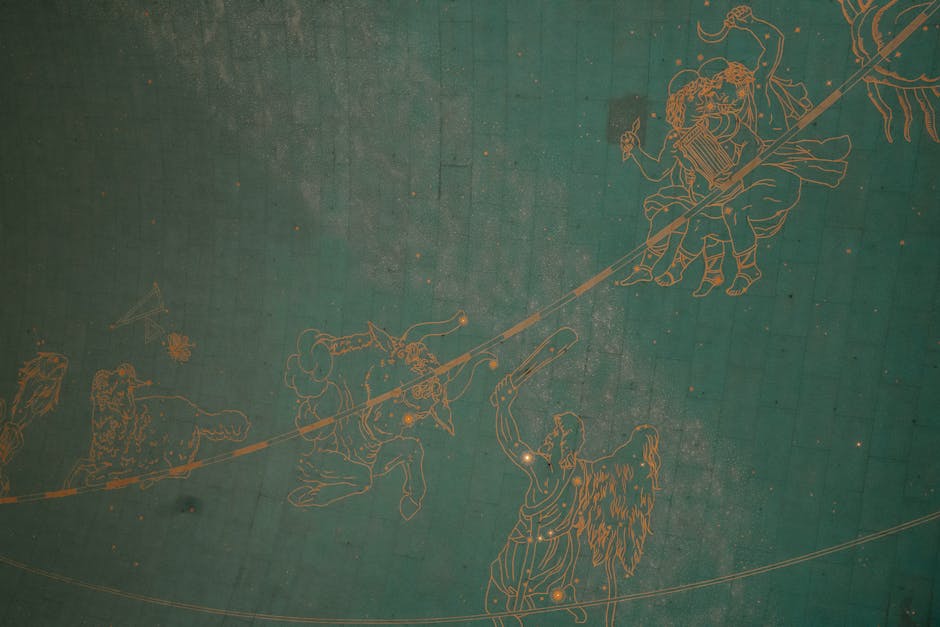
Western astrology isn't lying to you. It's just measuring something different than you think it does. When a Western chart says your Sun is at 15 degrees Scorpio, it means the Sun was positioned 15 degrees past the autumn equinox point — a seasonal reference, not a stellar one. The tropical zodiac was designed around 2,000 years ago when the seasonal and stellar reference points aligned. They no longer do. Earth's axis wobbles in a cycle lasting roughly 26,000 years, a phenomenon called precession of the equinoxes. Over centuries, that wobble dragged the tropical zodiac forward along the ecliptic while the constellations stayed put. Today the gap is about 23-24 degrees — nearly a full sign. So when Western astrology says "Scorpios are born October 23 through November 21," the Sun is actually passing through the constellation Libra during most of that window. The label is seasonal. The stars have moved on.
Your Vedic Sun sign reflects where planets actually were against the sky at your birth. Vedic astrology uses the sidereal zodiac — fixed to observable star positions — so your Rashi is determined by the real constellation behind the Sun when you were born. This is why a western sun sign vs vedic sign comparison often produces a different result: one system measures where Earth is in its orbit relative to the seasons, the other measures where the Sun sits relative to the fixed stars.
Here's what that looks like in practice. Someone born November 5, 1990 — a textbook Scorpio by every Western app and magazine — would have their Sun at roughly 11-12 degrees Scorpio in the tropical zodiac. Subtract the 23-24 degree ayanamsa (the precise offset Vedic astrologers use to correct for precession), and that Sun lands around 17-18 degrees Libra in the sidereal zodiac. That person isn't a Scorpio at all. They're a Vedic Libra — Tula Rashi — with a completely different set of ruling energies, planetary lords, and life themes. A Western Sagittarius born December 10 is likely a Vedic Scorpio. A Capricorn born January 15 is likely a Vedic Sagittarius. The sign before yours — that's the pattern.
Why this matters more than just swapping one label for another
The Sun sign shift alone would be a fun curiosity. But it's the downstream effects that actually change everything. Your rising sign — your Lagna, the single most important placement in Vedic astrology — also recalculates. Lagna is determined by the exact degree of the eastern horizon at your birth moment, and when you switch from tropical to sidereal, that degree shifts by the same 23-24 degrees. If you thought you were a Leo rising, you're probably a Cancer rising under the Vedic chart. That completely changes which Bhava (houses) every planet falls in, which planetary lord rules your partnerships, your career, your hidden fears. Your Moon sign likely shifts too, and in Vedic astrology the Moon sign — your Chandra Rashi — is more descriptive of your inner nature than the Sun sign is. The whole chart moves. It's not a tweak. It's a different document.
Why your western sun sign vs vedic sign comparison reveals more than identity — it reveals accuracy
Plenty of people shrug at the idea of shifting signs. "Both systems work," they say, or "it's all symbolic anyway." But there's a concrete reason the sidereal zodiac tends to feel more accurate to people who've tried both. When a Vedic astrologer tells a Libra Sun person that Shukra (Venus) rules their chart and drives their instincts around beauty, pleasure, and negotiation, that assessment is anchored to a Venus that was actually in Libra-like sky territory at birth. The symbolic framework maps to observed reality. The tropical framework maps to a seasonal calendar that drifted away from that reality centuries ago.
This isn't about one system being moral and the other being wrong. It's about reference points. If you tell someone to meet you at "the corner store" and the store moved three blocks ago because the street was renamed, your directions aren't malicious — they're just obsolete. The western sun sign vs vedic sign divide is that gap between the old signpost and the actual location.
The effect on predictive accuracy compounds over time. Vedic astrology's Dasha system — its method of timing life events through sequential planetary periods called Mahadasha and Antardasha (major and minor planetary periods) — relies entirely on the Moon's sidereal position. If your Moon sign shifts from, say, Aquarius to Capricorn, your entire Dasha timeline changes. The major periods that were supposed to activate in your 20s might now activate in your 30s. Events that seemed to come "early" or "late" under the Western chart suddenly land exactly where the Vedic chart predicted. This is the part that surprises people most — not that their sign is different, but that the timing of their actual life events matches a chart they've never seen before.

What the Vedic chart tells you that your Western one never could
Beyond the Sun, Moon, and rising sign, the Vedic Nakshatras add a layer most Western readers have never encountered. Nakshatras are 27 lunar mansions — subdivisions of the zodiac that give each planet a specific stellar backdrop. Your birth Nakshatra (the one your Moon occupied at birth) shapes your temperament in granular ways that a single Sun sign never can. Ashwini natives move fast and heal quickly. Rohini natives are sensual and slow to let go. Revati natives finish what others abandon. None of this appears in Western sun-sign columns. All of it is standard in a Vedic reading.
The Bhava system under Lagna also recontextualizes every planet. Mangal (Mars) in your 7th Bhava (house of partnerships) reads completely differently under Vedic rules than under Western ones, because Vedic astrology considers Mars a natural malefic — it brings disruption wherever it sits, regardless of the house's traditional dignity. Western astrology doesn't assign that kind of inherent quality to planets the same way. Same planet. Same placement. Different interpretation, different outcome.

What this can't tell you
A chart — Vedic or otherwise — doesn't erase your choices. It shows tendencies, timing pressures, and the emotional weather you were born into. It does not dictate whether you stay married, switch careers, or heal old wounds. It tells you what season you're in. What you plant during that season is still your decision. Vedic astrology is unusually precise about timing, but precision isn't the same as fate. If your chart shows a difficult period, the tradition itself asks you to prepare — not surrender.
Frequently Asked Questions
How do I find my Vedic sun sign?
Calculate your Vedic birth chart using your exact birth date, time, and location. Stellr generates this automatically — the app applies the sidereal ayanamsa correction and recalculates every planetary position against the actual star backdrop, then gives you your Vedic Sun sign, Moon sign, Lagna, and Nakshatra.
Can my Vedic sun sign be the same as my Western one?
Yes. If you were born near the very beginning of a Western sign — the first 1-2 degrees — the 23-degree ayanamsa correction may not push you far enough to cross into the previous sign. This is relatively rare, affecting roughly 1 in 12 people, but it does happen.
Is Vedic astrology more accurate than Western astrology?
"Accurate" depends on what you measure against. Vedic astrology anchors itself to observable star positions and has a robust predictive timing system (Dasha) that many practitioners find maps closely to lived experience. Western astrology's tropical framework doesn't track current star positions. Both systems have insight to offer, but they're answering different questions with different reference points.
Does my rising sign change in Vedic astrology? The answer is almost certainly yes.
Because Lagna is calculated from the exact degree on the eastern horizon at birth, and the sidereal correction shifts that degree by roughly 23 degrees, most people's rising sign flips one sign earlier — the same direction as the Sun shift. This has a larger effect on your overall chart than the Sun change alone.
What else shifts besides my sun sign?
Every planetary placement — Moon, Mercury, Venus, Mars, Jupiter, Saturn, Rahu, and Ketu — recalculates under the sidereal zodiac. Your Nakshatra changes, your Lagna changes, your Dasha timeline changes. The western sun sign vs vedic sign comparison is the headline, but the underlying chart rewrite is what creates the real "this is me" reaction.
Curious what this means for YOUR birth chart? Discover your Vedic chart on Stellr →
Key concepts
Free birth chart