

4 min read
Picture this: it's 11pm, phone in hand, and you're scrolling through your horoscope app for the third time this week. You read your Sun sign description — Scorpio, let's say — and feel that familiar, quiet frustration. It sounds like a stranger wearing your name. Close, but no. That's not the part of you that keeps you up at night.
Here's the thing nobody in Western astrology tells you: the sign you've been reading your entire life is almost certainly the wrong one. Not because the description is poorly written, but because the system itself is measuring the wrong sky. The disconnect you've felt for years isn't a flaw in you — it's a flaw in the system. And the reason comes down to a 23-degree gap between western sun vs vedic sign calculations that most people have never heard of.
"The tropical zodiac measures the calendar. The sidereal zodiac measures the sky. One tells you what season you were born in. The other tells you where the planets actually were."
Key Takeaways
- Western astrology uses the tropical zodiac (locked to seasons), while Vedic astrology uses the sidereal zodiac (locked to actual star positions) — and they're now about 23-24 degrees apart.
- For most people, their Vedic sun sign is one full sign earlier than their Western sun sign, which explains why horoscopes often feel off.
- The shift doesn't just change your sun sign — your rising sign, moon sign, and every planetary placement in your chart moves too.

What is the difference between western sun vs vedic sign?
Your Western sun sign is calculated using the tropical zodiac, a system that locks the zodiac to the seasons rather than the stars. It places 0 degrees Aries at the spring equinox, regardless of where the constellation Aries actually sits in the sky. Vedic astrology uses the sidereal zodiac, which locks the zodiac to the fixed star positions. Because of a slow wobble in Earth's axis called the precession of the equinoxes — a cycle that takes roughly 26,000 years to complete — these two zodiacs have drifted apart by about 23-24 degrees. That means the Sun was likely in a different constellation at your birth than your Western chart claims. When you compare western sun vs vedic sign, the Vedic placement is almost always one sign earlier for anyone born in the last several decades.

Why your Western sun sign is probably one sign off
Let's make this concrete. Say you were born on November 10th. Every horoscope app, every newspaper column, every birthday mug tells you you're a Scorpio. But in the sidereal system — the one that tracks where the Sun actually was against the real star backdrop — the Sun was almost certainly still in Libra on that date. Your Vedic sun sign is Libra, not Scorpio.
This isn't a small technicality. It's a full sign shift. Someone who identifies as a Sagittarius is likely a Scorpio in Vedic astrology. An Aquarius is probably a Capricorn. A Pisces is probably an Aquarius. The pattern holds for roughly 80% of people born between the 1950s and today. Only those born in the very last few days of a Western sign might keep the same sign in Vedic — and even that depends on the exact year and time of birth.
The reason this happened is simple: the tropical zodiac was codified about 2,000 years ago, when the two zodiacs roughly aligned. Since then, Earth's axial precession has pulled them apart at a rate of about 1 degree every 72 years. Nobody updated the Western system. Vedic astrologers, working from continuous observational tradition, kept tracking the actual sky.
This is the core of the western sun vs vedic sign divide. One system measures where the planets were. The other measures what time of year it was. And for most of us, that difference is the entire reason our horoscopes never quite fit.

What else changes when you switch to Vedic
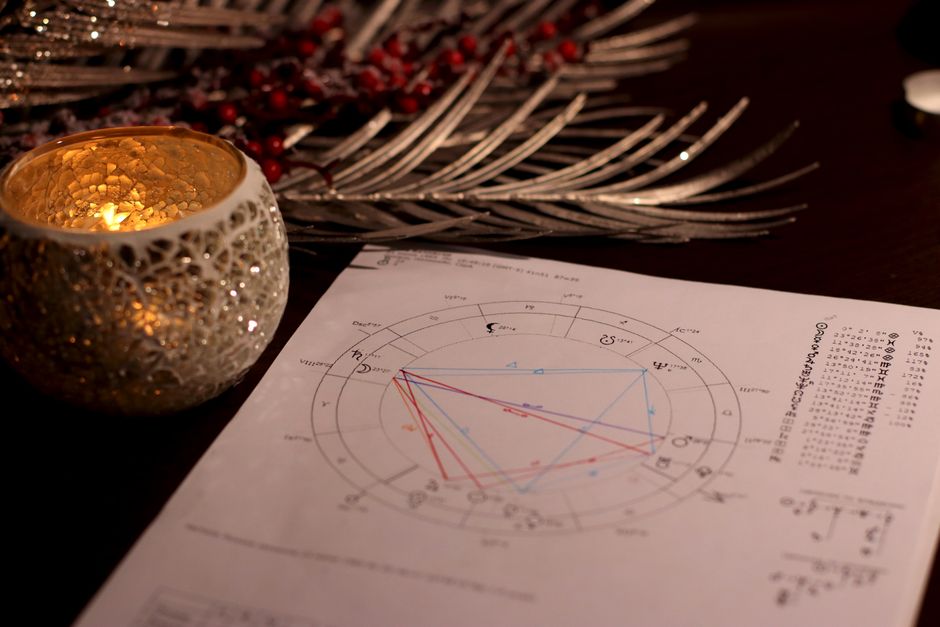
Here's where it gets more complicated — and more interesting. The sun sign shift is just the beginning. In Vedic astrology, your Lagna (rising sign) is considered the single most important placement in your chart, more defining than your sun sign. And your Lagna is calculated from the exact degree of the eastern horizon at your moment of birth, which means even a few minutes' difference in birth time can change it entirely.
When you move from tropical to sidereal, every planet in your chart shifts back by that same 23-24 degrees. Your moon sign likely changes. Your rising sign might change. The Bhava (house) each planet falls into changes. The entire architecture of your chart is different.
This matters because Vedic astrology doesn't read charts the way Western astrology does. Western astrology tends to focus on the sun sign as the primary identity marker. Vedic astrology reads from the Lagna first, then layers in the moon sign, the sun sign, and the Mahadasha (major planetary period) you're currently running. It's a more sequential, more specific system — and it requires accurate planetary positions to work at all.
If you've ever felt like your Western chart was a blurry photograph of yourself, the Vedic chart is what happens when someone adjusts the focus. The features are the same, but suddenly you can see the details.
What does this mean for your actual personality?
The practical effect of the western sun vs vedic sign shift is that the personality description you've been reading — the one that felt close but not quite right — gets replaced by one that often feels startlingly accurate. People who identified as Scorpio but are Vedic Libra suddenly find that the Libra description of seeking balance, weighing options, and struggling with indecision maps onto their actual inner life far better than Scorpio's intensity and secrecy.
This isn't universal. Some people resonate with their Western sign for reasons that have nothing to do with astrology — confirmation bias, cultural reinforcement, the Barnum effect. But for a lot of people, the Vedic sign clicks in a way the Western one never did. And that click isn't mystical. It's mathematical. You're reading a description based on where the Sun actually was, not where a 2,000-year-old calendar says it should have been.
The deeper point is that Vedic astrology doesn't stop at the sun sign. It gives you a full chart — Lagna, moon, all nine Graha (planets), the 12 Bhava (houses), and the Dasha (planetary period) timeline that tells you which themes are active in your life right now. The sun sign is one piece of a much larger puzzle, and Vedic astrology is the only system that assembles the whole thing from observation rather than convention.
What this can't tell you
Switching from Western to Vedic astrology won't solve your problems or tell you what to do on Tuesday. It's a lens, not a lever. The chart describes tendencies, timing, and themes — it doesn't override your choices. And the accuracy of any reading depends heavily on the precision of your birth time. If you don't know when you were born, the Lagna becomes uncertain, and the whole chart loses resolution.
There's also the honest reality that astrology, Vedic or Western, is an interpretive tradition, not a controlled science. Two competent Vedic astrologers might read the same chart differently. The system is deep and internally consistent, but it's still a human framework applied to human experience.
What it can do is give you a description of yourself that actually matches — and for a lot of people, that alone is worth the recalibration.
Frequently Asked Questions
Is my Vedic sun sign always one sign before my Western sign?
For most people born in the last 70 years, yes — your Vedic sun sign is one sign earlier. But the exact shift depends on your birth year, because the gap between tropical and sidereal zodiacs increases by about 1 degree every 72 years. Someone born in 1950 and someone born in 2020 have slightly different ayanamsha (the correction factor between the two systems).
What is the ayanamsha in Vedic astrology?
The ayanamsha is the angular difference between the tropical and sidereal zodiacs at a given point in time. It's the correction factor that converts a Western (tropical) chart into a Vedic (sidereal) one. The most commonly used ayanamsha is the Lahiri ayanamsha, which is the standard adopted by the Indian government for official panchang (almanac) calculations.
Does changing my sun sign change my compatibility with other people?
It can. Vedic compatibility analysis (called Kundali Milan) looks at moon signs, Lagna, and the positions of Shukra (Venus) and Mangal (Mars) — not sun signs. So if your moon sign and your partner's moon sign both shift, the compatibility reading changes. This is one area where the western sun vs vedic sign difference has real practical consequences.
Can I use both Western and Vedic astrology at the same time?
You can, but they're built on different foundations and will sometimes give contradictory readings. Most people who go deep into one system find the other starts to feel imprecise by comparison. Vedic astrology tends to be the one people stick with once they've seen its predictive accuracy, especially around timing events through the Dasha system.
Curious what this means for YOUR birth chart? Discover your Vedic chart on Stellr →
Key concepts
Free birth chart